
Managing payroll for the first time can feel overwhelming. Between tax registrations, payroll calculations, government forms, and deadlines, it's easy to wonder how to do payroll yourself and whether it's even possible.
The good news? It is.
Once you understand the overall process, payroll becomes much more manageable. In this guide, I'll walk you through the five basic steps to doing your own payroll, explain what each step involves, and share a few tools that can make the process easier.
Want to see the five payroll steps in action? Watch the video below for a step-by-step walkthrough.
Table of Contents
What Are the Five Steps to Doing Payroll Yourself?
Register with federal and state agencies
Calculate payroll
Run payroll
Deposit payroll taxes
File payroll tax forms
Let’s go through each step.
But first, before we get into Step 1, let’s take a look at one of the most common questions business owners have about payroll.
Can I Pay Myself Through Payroll?
Most business types can run payroll for employees. However, the rules are different when it comes to paying business owners.
If your business has employees, you can generally process payroll whether you're a sole proprietorship, partnership, LLC, corporation, or S corporation.
However, how business owners pay themselves depends on the legal and tax structure of the business.
Can a Sole Proprietor Pay Themselves Through Payroll?
Generally, no. Sole proprietors typically pay themselves through owner's draws rather than payroll.
While they can run payroll for employees, the owner is not treated as an employee for payroll purposes.
Can an LLC Owner Pay Themselves Through Payroll?
It depends on how the LLC is taxed. Most LLC owners take owner's draws instead of payroll.
However, if an LLC elects to be taxed as an S corporation, owners who actively work in the business generally pay themselves a reasonable salary through payroll.
Can an S Corporation Owner Pay Themselves Through Payroll?
Yes. Owners who provide services to an S corporation are generally required to pay themselves a reasonable salary before taking shareholder distributions.
Paying a reasonable salary helps ensure compliance with IRS requirements while allowing owners to properly separate wages from distributions.
If you're unsure how to determine a reasonable salary, my Reasonable Salary Spreadsheet and Paying Workers & Owners Course provide step-by-step guidance to help you calculate an appropriate salary for your situation.
Step 1: How Do I Register My Business for Payroll?
Before you can pay employees, you'll need to register your business with the appropriate federal and state agencies.
Most businesses will complete five registrations before running payroll:
Federal Employer Identification Number (EIN)
Electronic Federal Tax Payments System (EFTPS)
State Payroll Registration
State Unemployment Department
Workers' Safety and Insurance Program
Want a step-by-step walkthrough?
Watch my payroll registration guide to learn what you need before running payroll.
Related Video:
As you complete each registration, be sure to keep track of your login information, registration numbers, and filing requirements. Every state has slightly different rules, so staying organized from the beginning will make payroll much easier later.
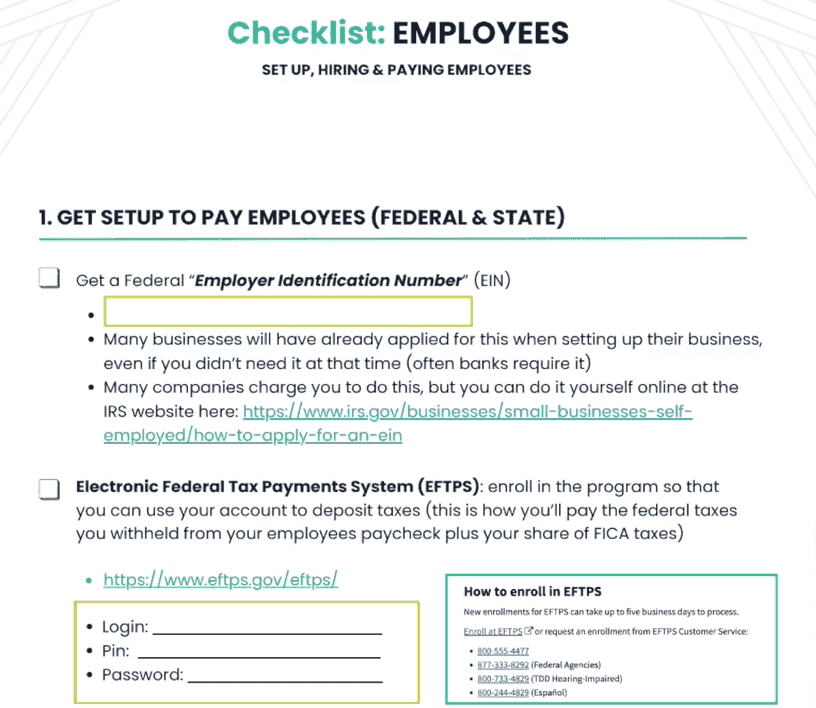
I have a checklist that helps you get and keep
these numbers / registrations organized >>>
Having the right tools and guidance can make managing payroll much easier.
That's exactly why I created my Paying Workers
& Owners Course—it includes registration checklists, payroll worksheets, spreadsheets,
and step-by-step guidance to help you
confidently set up and manage payroll.
If you want more guidance with setting up and managing payroll:
Paying Workers & Owners Course Here!
If you just want a simple worksheet to help with the calculations: Get the Free Payroll Worksheet Here!
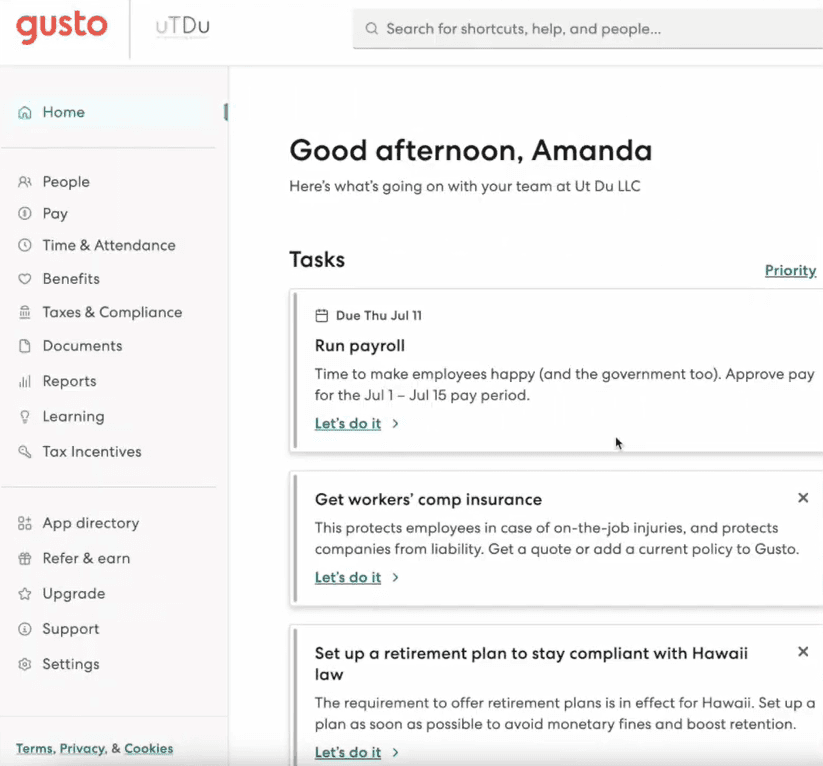
If you'd rather let software handle payroll calculations, tax deposits, and payroll tax filings, I recommend using Gusto.
It also walks you through the payroll setup process and, if you sign up using my link, you may qualify for a gift card bonus.
Step 2: How Do I Calculate Payroll?
Once you've completed your registrations, the next step is calculating payroll. This is where you'll determine:
How much your employee will be paid
How much tax must be withheld
How much the employee will receive
How much payroll will cost you as the employer
Many new employers focus only on an employee's paycheck, but payroll is really made up of three parts:
Employee gross pay: The employee’s pay before taxes
Employee tax withholdings: Taxes withheld from the employee’s paycheck
Employer payroll taxes: Additional payroll taxes paid by the employer
For example, if an employee earns $2,000 in gross wages, they won't actually receive the full amount as their take-home pay. That's because payroll taxes and other required deductions must first be withheld.
Before an employee receives their paycheck, employers generally withhold federal income tax (if applicable), FICA taxes, and any required state payroll taxes.
After these taxes have been withheld, the employee receives the remaining amount as net pay.
One of the largest payroll deductions you'll calculate is FICA tax.
What Are FICA Taxes?
One of the first payroll terms you'll come across is FICA, which stands for the Federal Insurance Contributions Act.
FICA taxes are federal payroll taxes that fund Social Security and Medicare, two government programs that provide retirement, disability, survivor, and healthcare benefits.
Unlike federal income tax, which varies based on an employee's Form W-4 and tax situation, FICA taxes are calculated using fixed tax rates established by law.
Every time you process payroll, both the employee and the employer contribute toward these taxes.
How Much Are FICA Taxes?
Total Social Security tax is 12.4% of wages up to a yearly maximum amount ($184,500 in 2026). Once you make over this amount, Social Security Tax is $0 for that person.
Total Medicare Tax is 2.9% on all wages. The combined total FICA taxes are 15.3%.
However, the employee and the employer split these taxes, paying 7.65% each.
An employee's 7.65% contribution consists of:
6.2% Social Security tax
1.45% Medicare tax
The employer’s share is also:
6.2% Social Security tax
1.45% Medicare tax
The employer has to withhold the employee's share and remit it (send it) to the government, along with their taxes owed on the payroll.
Because the employer's contribution is an additional 7.65%, the actual cost of employing someone is always higher than the employee's gross wages.
Social Security tax applies only up to the annual Social Security wage base ($184,500 in 2026), which the IRS updates each year.
Medicare tax has no wage limit, and employees earning above the IRS threshold ($250,000) may also be required to pay an Additional Medicare Tax of 0.9% on wages over the threshold.
Who Pays FICA Taxes?
The employee and the employer share the cost.
The employer withholds the employee's 7.65% contribution from each paycheck and also contributes an additional 7.65% using business funds.
The employer is then responsible for depositing both amounts with the IRS according to the applicable payroll tax deposit schedule.
In addition to FICA taxes, employers may also need to withhold:
Federal income tax (if applicable)
State income tax (where applicable)
Any other required payroll deductions based on the employee's tax forms and state requirements.
Why Doesn't an Employee Receive Their Full Paycheck?
An employee's gross pay is the total amount earned before any payroll taxes or deductions are taken out. However, the employee's net pay, often called “take-home pay”, is the amount remaining after all required payroll taxes and deductions have been withheld.
For example, suppose an employee earns $2,000 in gross wages. Before the paycheck is issued, the employer calculates and withholds:
Federal income tax of $150, which is calculated based on IRS Pub 15-T and the employee’s W-4 form.
Social Security tax of 6.2% = $124
Medicare tax of 1.45% = $29
State income tax (if applicable)
Any other authorized deductions, such as contributions to retirement or health insurance.
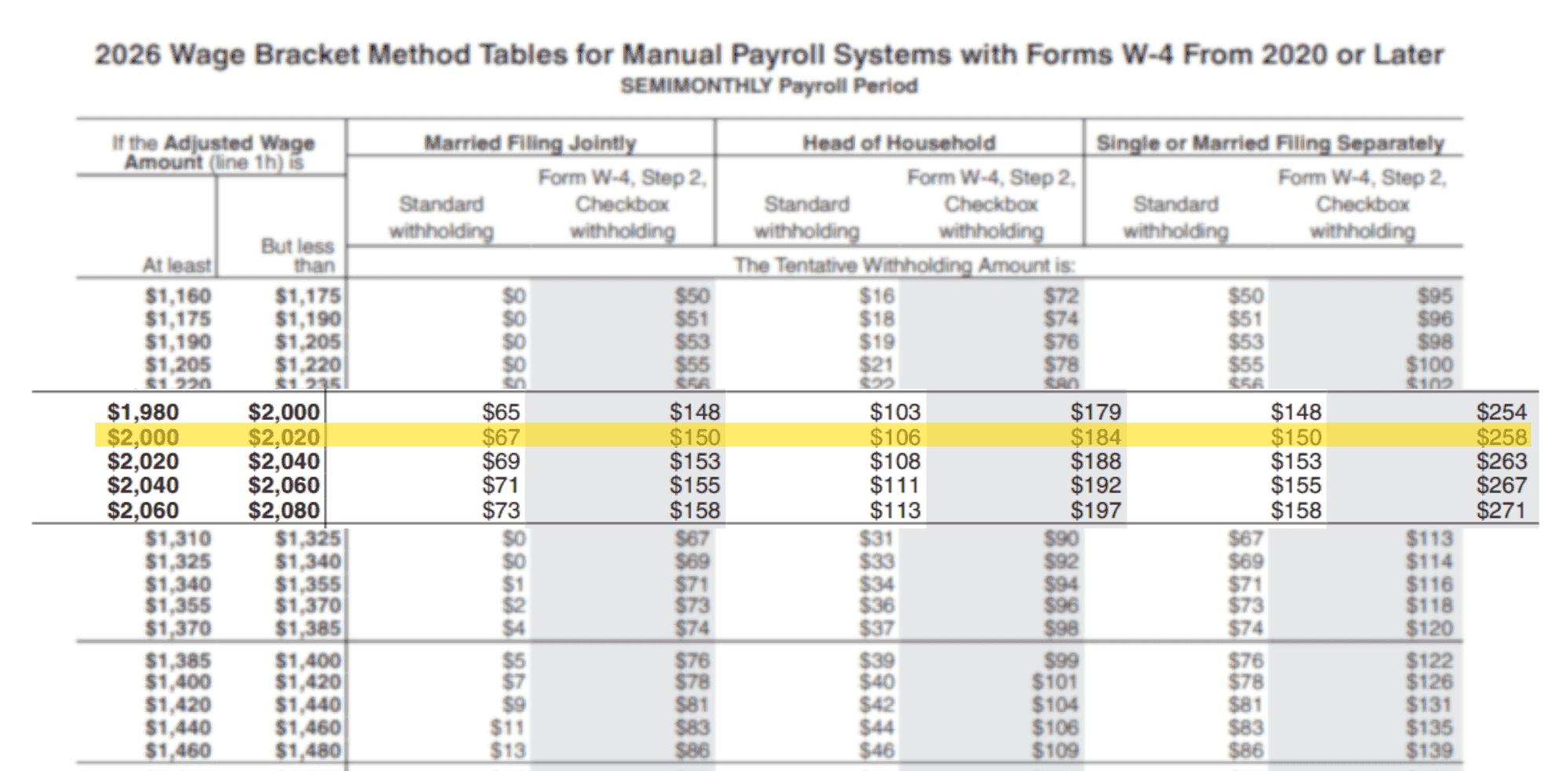
Watch the Payroll Walkthrough:
After these deductions have been withheld, the employee receives the remaining amount as net pay. In this case, that’s:
$2,000 (Gross pay)
- $150 (Federal Income Tax Withheld)
- $124
- $29 = $1,697 Net Pay (amount the employee receives)
In addition to withholding the employee's taxes, the employer also pays another 7.65% in FICA taxes:
Social Security tax of 6.2% = $124
Medicare tax of 1.45% = $29
Total = $153
To calculate these numbers - we have a free basic payroll worksheet with a one-off calculator, which you can get for free here:
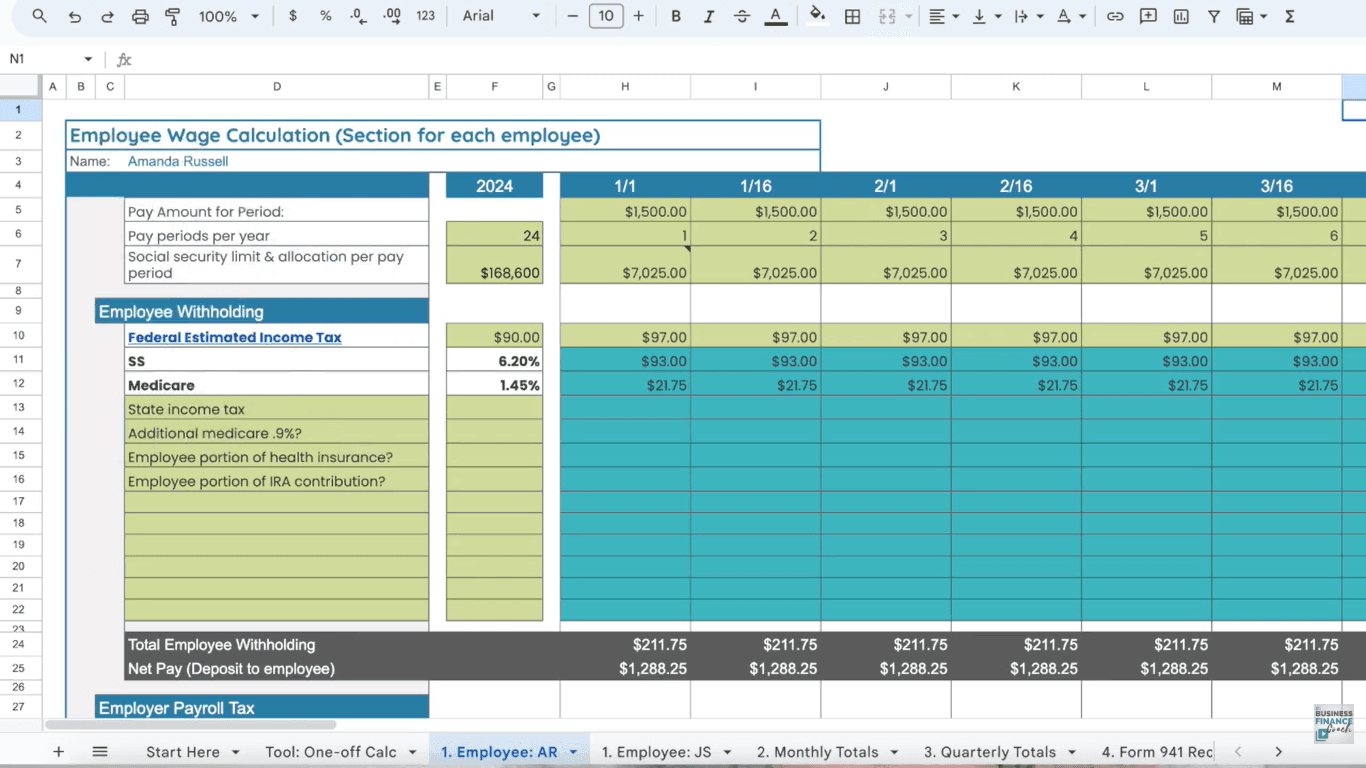
However, if you want more help learning how to do payroll yourself, our complete payroll workbook is what you need! It calculates everything including paychecks, net pay, and is customizable for your situation and number of employees.
For business owners paying themselves through payroll, another important calculation to consider is reasonable salary.
Need Help Calculating a Reasonable Salary?

Determining a reasonable salary is an important part of staying compliant with IRS requirements.
Having the right tools can make the process much easier while helping you understand how reasonable compensation is determined.
If you prefer the do-it-yourself approach, my Reasonable Salary Spreadsheet walks you through calculating reasonable compensation step by step and includes training to help you better understand the IRS guidelines and considerations behind reasonable salary.
Get the Reasonable Salary Spreadsheet Here!
Want a simpler way to manage payroll?
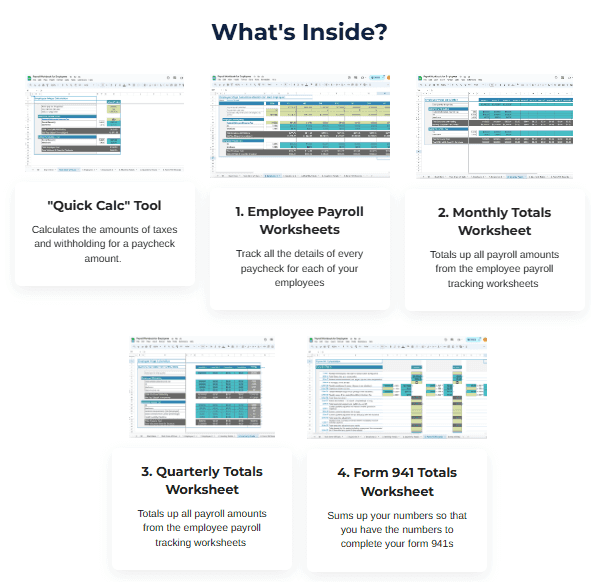
Whether you're learning payroll for the first time or simply want to stay organized, having the right tools can save you hours of work and help you avoid costly mistakes.
If you prefer the do-it-yourself approach, my Payroll Spreadsheet walks you through each payroll calculation step by step.
For a more in-depth walkthrough, the Paying Workers & Owners Course includes detailed training, practical worksheets, and the resources you need to confidently set up and manage payroll from start to finish.
Get the Payroll Spreadsheet Here!

Get the Paying Owners and Workers Course Here!
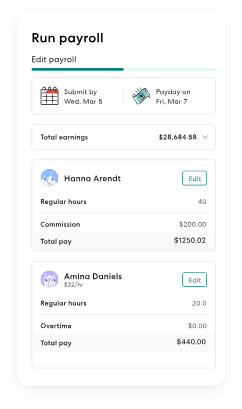
If you'd rather automate the process, Gusto takes care of payroll calculations, tax withholdings, payroll tax filings, and tax deposits.
This makes it an excellent option for business owners who want to spend less time on payroll and more time running their business.
Related Video:
Step 3: How Do I Run Payroll?
Once you've calculated payroll, it's time to actually run it.
This is the step where you issue your employee's paycheck, withhold the required taxes, and make sure you're setting aside the taxes you'll later owe to the government.
For every payroll run, you'll generally:
Calculate the employee's gross wages for the pay period.
Withhold required payroll taxes, such as federal income tax, Social Security, and Medicare.
Pay the employee their net pay after taxes have been withheld.
Set aside both the employee taxes you've withheld and the employer payroll taxes you'll be responsible for paying.
One of the biggest mistakes new employers make is treating the taxes they've withheld as available business cash. Those funds don't belong to the business—they're being held on behalf of the government until it's time to make your payroll tax deposits.
Keeping those amounts separate from your operating funds can help you avoid cash flow issues and missed tax payments later.
Using a software like Gusto actually can help immensely with planning because they withhold all the taxes when they pay your employees. Therefore, the money all comes out for each paycheck and you don’t have to plan for the future expense.
Step 4: How Do I Deposit Taxes?
After running payroll, the next step is depositing the payroll taxes you withheld from your employees’ paychecks, along with the employer payroll taxes you owe.
How often you need to make payroll tax deposits to the government depends on your payroll “tax deposit schedule”.
How Often Do You Need to Deposit Payroll Taxes?
The frequency of your payroll tax deposits depends on how much payroll taxes your business accumulates. As you pay more payroll, you need to deposit more often.
Payroll tax deposits generally work as follows:
Annual (Form 944) - Less than $1,000 in total taxes & you must be approved to file annually.
The general rule is that you must deposit quarterly at minimum. However, there’s an exception for some super small employers who owe less than $1,000 for the entire year.
In that situation, you can apply to the IRS to file Form 944 by phone or by submitting a written request. The IRS must give you permission to file and deposit annually.
Quarterly - Less than $2,500
If your payroll tax liability for the quarter is less than $2,500, you may be able to pay your payroll taxes when you file your quarterly payroll tax return (form 941) instead of making separate tax deposits during the quarter. Once you owe more than $2,500, then you need to have deposited monthly.
Monthly - Over $2,500
Once your payroll tax liability reaches $2,500 or more during a calendar quarter, you'll generally be required to make monthly payroll tax deposits instead of paying with your quarterly return.
Semiweekly
Businesses with larger payroll tax liabilities may be required to follow a semiweekly deposit schedule. Deposit due dates depend on the day employees are paid, not the payroll period. Generally, payroll paid on Wednesday, Thursday, or Friday must be deposited by the following Wednesday, while payroll paid on Saturday, Sunday, Monday, or Tuesday must be deposited by the following Friday.
Next-Day Payroll Tax Deposit - over $100,000
Keep in mind that depositing payroll taxes and filing payroll tax forms are separate requirements.
Making your payroll tax deposits does not replace your requirement to file quarterly or annual payroll tax forms.
Want to learn more about payroll tax deposits?
Payroll tax deposits are explained in much more detail in my Form 941 Guide, where I cover deposit schedules, payment deadlines, and how payroll tax deposits work alongside your quarterly payroll tax filings.
Step 5: How Do I File Payroll Tax Forms?
After you've calculated payroll and made your payroll tax deposits, the final step is filing your required payroll tax forms. Filing these forms reports your payroll information to the IRS and other agencies.
Most employers start by filing Form 941, which is the primary federal payroll tax form used to report payroll taxes throughout the year.
What Is Form 941?
Form 941, also known as the Employer's Quarterly Federal Tax Return, is used by most employers to report:
Employee wages
Federal income tax withheld
Social Security taxes
Medicare taxes
Payroll tax liabilities and deposits
If you've paid employees during the quarter, you'll generally need to file Form 941.
When Is Form 941 Due?
Form 941 is generally due by the last day of the month following the end of each calendar quarter.
For example:
January, February, and March are reported on the first-quarter Form 941, which is generally due by the last day of April.
April, May, and June are generally due by the last day of July.
July, August, and September are generally due by the last day of October.
October, November, and December are generally due by the last day of January of the following year.
Can I File Form 944 Instead of Form 941?
Some qualifying small employers may be eligible to file Form 944, the Employer's Annual Federal Tax Return, instead of Form 941.
If an employer's total payroll tax is less than $1,000, then you can request from the IRS to file the annual Form 944 instead.
However, you must receive written approval from the IRS before filing Form 944 instead of Form 941. If you don't receive IRS approval, you should continue filing Form 941 according to your assigned filing schedule.
Form 941 vs. Form 944: What's the Difference?
Both Form 941 and Form 944 report federal payroll taxes, but the biggest difference is how often they're filed.
| Form 941 | Form 944 |
|---|---|
| Filed quarterly | Filed annually |
| Used by most employers | Used by qualifying small employers |
| No IRS approval required | Requires written IRS approval |
| Reports payroll taxes every three months | Reports payroll taxes once per year |
If you're unsure which form applies to your business, file Form 941 quarterly.
What About State Payroll Tax Forms?
In addition to your federal payroll tax forms, most states also require employers to file their own payroll tax returns.
The required forms, filing frequencies, and due dates vary by state, so be sure to review your state's payroll tax requirements to avoid missing a filing deadline.
Usually, you file a quarterly form similar to the Form 941s.
Using a software like Gusto can be convenient because they will handle all of these forms for you. However, you should still understand all of your requirements.
Filing Payroll Tax Forms vs. Depositing Payroll Taxes
Even if you've already made all of your required payroll tax deposits, you must still file the appropriate payroll tax forms by their deadlines.
Likewise, filing your payroll tax forms doesn't replace your responsibility to make timely payroll tax deposits. However, if your total taxes are less than $2,500 per quarter, then you can file the payroll tax form 941 and pay with the form (instead of a separate deposit).
Once you are over this threshold, you’ll need to make separate deposits.
For example, if you pay two employees $2,000 each twice per month, using the estimated taxes from the example above, your total federal payroll tax liability would be about $912 per payroll ($456 per employee), or $5,472 for the quarter.
This exceeds the $2,500 threshold, so separate payroll tax deposits would generally be required.
If you need help staying on top of these requirements, I have resources to walk you through the filing process.
Need Help Filing Payroll Tax Forms?
Whether you're filing Form 941 for the first time or trying to understand Forms 944, 940, and W-2, you don't have to figure everything out on your own.
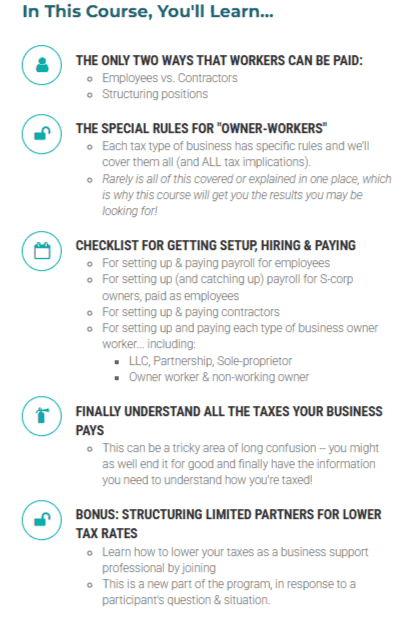
My Paying Workers & Owners Course walks you through the payroll process step by step, including payroll tax forms, payroll tax deposits, practical worksheets, and resources to help you confidently manage payroll from start to finish.
You'll also get access to Office Hours, where you can ask questions and get additional guidance as you work through your payroll.
Learn More About the Paying Workers & Owners Course Here!
Remember that filing payroll tax forms and depositing payroll taxes are two separate responsibilities. Even if you've already made all of your required payroll tax deposits, you must still file the required payroll tax forms by their deadlines.
Likewise, filing your payroll tax forms doesn't replace your responsibility to make timely payroll tax deposits.
Fortunately, you don't have to figure everything out from scratch. I have dedicated guides that walk you through the most common payroll tax forms—including Forms 941, 944, 940, and W-2—and show you how to complete and file them yourself.
If you'd like additional guidance, my Paying Workers & Owners Course also includes practical worksheets, templates, and Office Hours where you can ask questions along the way.
Learning how to do payroll yourself can feel overwhelming when you first begin, but breaking the process into five steps makes it much easier to understand.
Start by registering your business, calculating payroll, paying your employees, depositing your payroll taxes, and filing the required payroll tax forms.
You don’t need to memorize every requirement immediately. Focus on understanding the overall process and use reliable checklists, spreadsheets, and training resources to help you stay organized.
FAQs
Can I Pay Myself Through Payroll?
It depends on your business structure. How business owners pay themselves varies based on the legal and tax structure of the business.
Can a Sole Proprietor Pay Themselves Through Payroll?
Generally, no. Sole proprietors typically pay themselves through owner’s draws rather than payroll.
Can an LLC Owner Pay Themselves Through Payroll?
It depends on how the LLC is taxed. Most LLC owners take owner’s draws, but owners of LLCs taxed as S corporations may need to pay themselves a reasonable salary through payroll.
Can an S Corporation Owner Pay Themselves Through Payroll?
Yes. Owners who actively work in an S corporation generally pay themselves a reasonable salary through payroll before taking shareholder distributions.
How Can I Teach Myself Payroll?
The best way to learn payroll is by understanding the complete payroll process one step at a time. Start by learning how to register your business, calculate employee pay, run payroll, deposit payroll taxes, and file payroll tax forms. Once you understand these five steps, payroll becomes much easier to manage.
Is Payroll Difficult to Learn?
Payroll may seem complicated at first because it involves tax calculations, filing deadlines, and government reporting requirements. However, breaking payroll into individual steps and using reliable payroll tools or software can make the process much more manageable.
Can I Do Payroll Manually?
Yes. Many small business owners handle payroll themselves by calculating employee wages, withholding taxes, making payroll tax deposits, and filing the required payroll forms. As your business grows, payroll software can help automate many of these tasks.
Is It Worth Doing Your Own Payroll?
Doing your own payroll can save money and help you better understand your business finances, especially if you have only a few employees. As your payroll becomes more complex, software or professional payroll services may help save time and reduce filing errors.
How Do I Calculate Payroll on My Own?
Start by determining your employee's gross pay, calculate the required federal and state tax withholdings, determine the employee's net pay, and calculate the employer payroll taxes you'll also be responsible for paying.
What Is the Formula to Calculate Payroll?
Payroll begins with an employee's gross wages. After subtracting applicable tax withholdings, you arrive at the employee's net pay. Employers must also calculate and pay their share of payroll taxes separately from the employee's paycheck.
How Do I Figure Out My Payroll?
Calculate employee wages for the pay period, determine the required tax withholdings, pay employees their net wages, set aside payroll taxes, make tax deposits on time, and file all required payroll tax forms according to your filing schedule.
How Do You Do Payroll for Beginners?
Begin by registering your business for payroll, calculating employee wages, paying employees, depositing payroll taxes, and filing payroll tax forms. Following these five basic steps provides a simple framework for managing payroll from start to finish.
What Are the Four Basic Steps in Calculating Payroll?
Calculating payroll generally involves determining gross pay, calculating employee tax withholdings, determining net pay, and calculating the employer payroll taxes owed. These calculations form the foundation of every payroll run.
How Do I File Form 941?
Form 941 reports employee wages, federal income tax withheld, and both the employer and employee portions of Social Security and Medicare taxes. Most employers file this form quarterly. You can complete and submit Form 941 electronically using IRS-approved software or mail a paper return if eligible.
Can Form 941 Be Filed Electronically?
Yes. Electronic filing is the fastest and most convenient way to submit Form 941. It helps reduce filing errors, speeds up processing, and provides confirmation once the IRS accepts your return.
How Do I Manually File Form 941?
To file Form 941 manually, complete the form using your payroll records and mail it to the appropriate IRS address for your business location. Be sure to use the correct mailing address and submit the return by the quarterly filing deadline.
How Do I Know If I Need to File Form 941?
Most employers who withhold federal income tax or pay Social Security and Medicare taxes for employees are required to file Form 941 each quarter. Your filing requirements depend on your business and payroll situation.
Who Is Exempt From Filing Form 941?
Not every employer files Form 941. Some small employers file Form 944 annually instead if the IRS has notified them to do so. Your required payroll tax return depends on the filing schedule assigned to your business.
Do I Have to File Form 941 If I Have No Payroll for the Quarter?
Generally, employers required to file Form 941 should still submit the return even if no wages were paid during the quarter, unless the IRS has informed them that they no longer need to file.
When Is Form 941 Due?
Form 941 is generally due by the last day of the month following the end of each calendar quarter. Filing on time helps you avoid penalties and interest.
Where Do I File My 940 Annual Return?
You can file Form 940 electronically using IRS-approved software or mail a paper return to the appropriate IRS address. Amanda recommends e-filing because it reduces filing errors and allows you to confirm when your return has been accepted.
How Do I File and Pay FUTA?
Form 940 reports your annual Federal Unemployment Tax Act (FUTA) tax. However, FUTA taxes may need to be deposited during the year once your FUTA tax liability reaches $500 or more. Filing Form 940 and making FUTA tax deposits are separate requirements, so it's important to stay current with both.
Do Household Employers File Form 940?
Most household employers report FUTA taxes using Schedule H with Form 1040 instead of filing a separate Form 940. However, employers already filing Form 940 for other employees may include their household employees on that return.
Can I Fill Out a W-2 Form Online?
Yes. Employers can prepare and e-file Form W-2 using IRS-authorized software. Amanda recommends electronic filing because it simplifies the process, reduces filing errors, and lets you track whether your forms have been accepted or rejected.
Can a W-2 Form Be Emailed?
Yes. Once your W-2 has been accepted, many e-file providers allow you to send the completed form directly to employees by email. You can also download a PDF copy or mail printed forms if preferred.
Can You File W-2 Electronically?
Yes. Electronic filing is generally the easiest way to submit Form W-2. If you're filing more than 10 information returns, electronic filing is generally required. E-filing also eliminates the need to submit a paper Form W-3.
How Do You Properly Fill Out a W-2?
To complete Form W-2, report each employee's annual wages, federal income tax withheld, Social Security and Medicare wages and taxes, and any applicable state tax information. If you provided employee benefits, such as employer-sponsored health insurance or retirement plan contributions, include them using the appropriate reporting codes before submitting the form.
Additional Payroll Resources
Looking for more payroll guidance? Check out these step-by-step video tutorials:
- Form 941: Complete Guide (Quarterly Payroll Tax Return)
- Form 940 Explained (Federal Unemployment Tax Return)
- How to Fill Out a W-2 Form
- How To E-file Form W-2s To Employees
About the Author
Hi there, 
Background in public accounting, teaching courses in higher education and specializing in small business coaching, services and education. I'm Amanda!
Your Instructor | The Business Finance Coach
I've spent my career in accounting, tax, finance, and education—from working at PwC and KPMG to teaching accounting and taxes at colleges and universities, and creating educational content for companies including Intuit TurboTax.
Throughout that experience, I kept seeing the same problem: small business owners were hugely underserved.
They were overwhelmed by complicated accounting software, confused by conflicting advice, and often left feeling like this was a hopeless area of their business that they would never understand.
I knew there had to be a simpler way.
So I took what I'd learned from accounting firms, education, and working with real businesses, and created The Business Finance Coach and The Master Your Accounting & Taxes Program.
My goal is to make business finances simple, practical, and understandable—so you can confidently manage your business, keep more of what you earn, and focus on building the business you actually want.