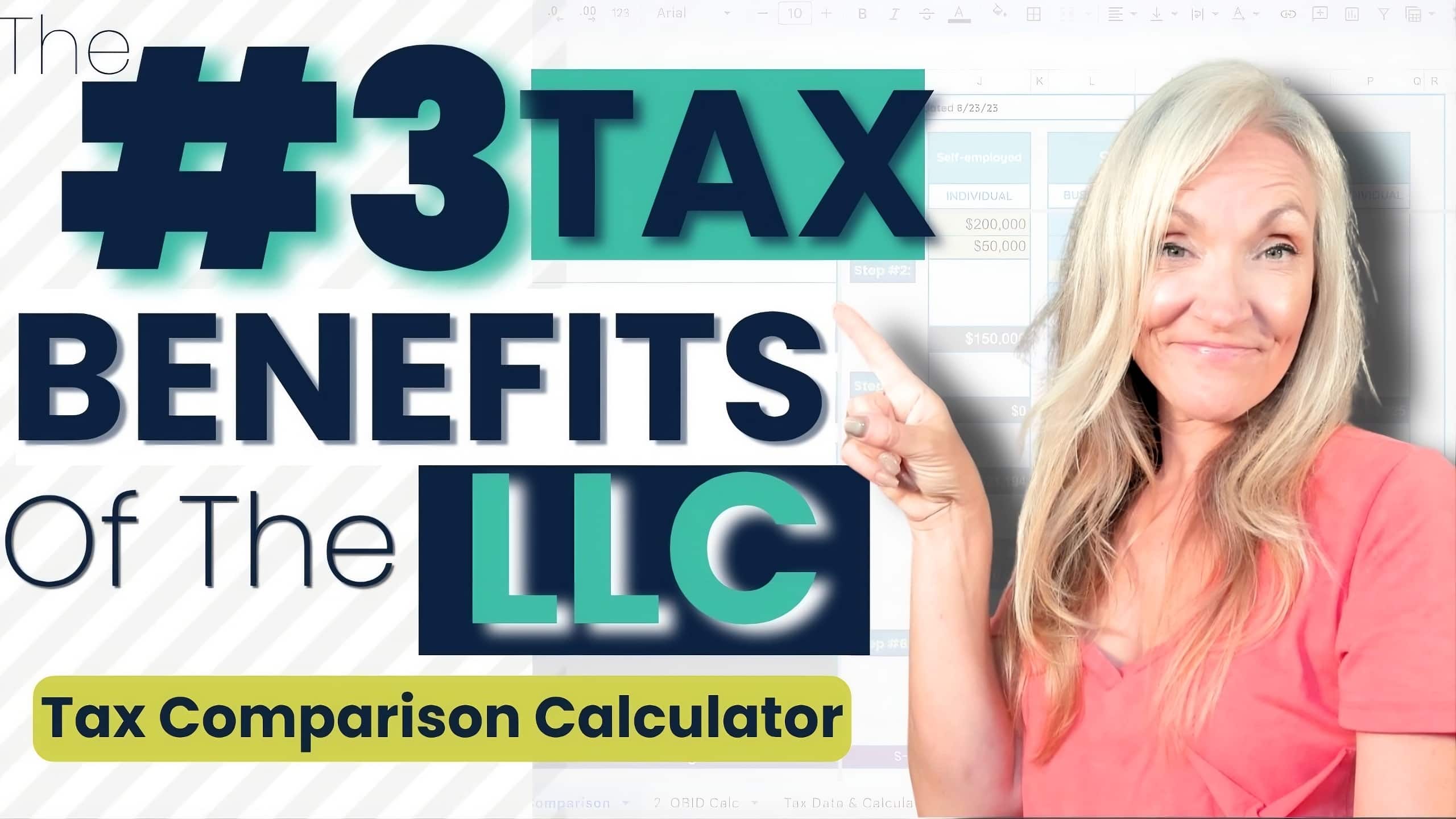
If you’re thinking about forming an LLC, you’re probably wondering about the LLC tax benefits and whether they could actually save you money. Will an LLC help you pay less in taxes? Will you get more write-offs? And would you save even more by having your LLC taxed as an S corp?
Here’s where a lot of the confusion starts: forming an LLC doesn’t automatically give you special tax benefits. An LLC is a legal business type, while how your business is taxed is a separate question.
That distinction matters because a single-member LLC, a multi-member LLC, and an LLC that elects S-corp taxation can all have different tax treatment.
In this guide, we’ll break down the LLC tax benefits that actually matter, how an LLC compares with a sole proprietor for taxes, and what happens to your business write-offs.
We’ll also look at when an S-corp election could potentially save you money, how reasonable compensation affects those savings, and how you can compare the numbers before deciding which tax treatment makes sense for your business.
You can also watch the full video breakdown here:
Table of Contents
- What Are the Tax Benefits of an LLC?
- How Is a Single-Member LLC Taxed?
- How Is a Multi-Member LLC Taxed?
- Does an LLC Get More Tax Write-Offs?
- Can an LLC Elect to Be Taxed as an S Corp?
- How Much Should You Pay Yourself as an S Corp Owner?
- LLC vs. S Corp: Which Saves More in Taxes?
- How Do Taxes Compare Between a Default LLC and an S Corp?
- How Much Could an S Corp Actually Save You in Taxes?
- What Costs Should You Include When Comparing an LLC vs. S Corp?
- How Can an LLC vs. S Corp Tax Calculator Help You Compare the Two?
- Is There a Specific Income Level When an S Corp Election Starts Making Sense?
- Which Tax Treatment Makes the Most Sense for Your LLC?
- FAQs
- About the Author
What Are the Tax Benefits of an LLC?
One of the biggest misconceptions about LLCs is that forming one automatically gives you special tax benefits.
But forming an LLC by itself doesn’t automatically create special federal income tax savings. An LLC is a legal business type, while the way your business is taxed is a separate question.
That means forming an LLC doesn’t automatically change your tax treatment or give you a new set of tax write-offs. Instead, you have to look at the tax classification that applies to the business.
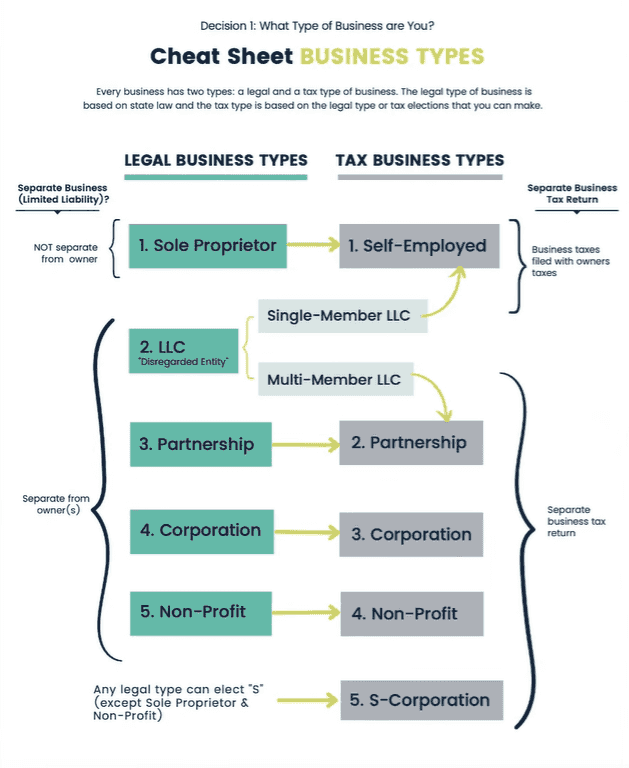
This distinction matters because two businesses can both be LLCs but have different tax classifications—and therefore different tax filing requirements.
What Is the Difference Between an LLC and a Tax Classification?
It helps to think about your business as having two separate classifications: your legal business type and your tax business type.
Your legal business type describes how your business is legally structured. An LLC, or limited liability company, is one type of legal business structure.
Your tax business type determines how the business is treated for federal tax purposes.
For example, if you're the only owner of an LLC, the business is generally treated as a disregarded entity by default for federal income tax purposes. Instead of the LLC filing its own separate federal income tax return, the business activity is generally reported with your individual tax return.
If an LLC has multiple owners, the default tax treatment is generally different. A multi-member LLC is generally taxed as a partnership by default and files a separate partnership tax return.
An LLC can also elect to be taxed differently. One option we'll look at later is having an eligible LLC elect to be taxed as an S corporation.
So these are really two different questions:
| Question | What It Tells You |
|---|---|
| What is my legal business type? | How the business is legally structured, such as an LLC |
| What is my tax business type? | How the business is treated for federal tax purposes |
This is why saying “I have an LLC” doesn't tell you the entire tax story. You also need to know how that LLC is being taxed.
Does Forming an LLC Automatically Save You Money on Taxes?
Not necessarily.
If you form a single-member LLC and keep its default tax treatment, the way the business income is reported for federal income tax purposes is generally similar to how it was reported when you were operating as a sole proprietor.
You also don't suddenly unlock a new list of deductions just because you formed an LLC. The business expenses you can deduct are based on the expenses themselves, not simply on whether you have an LLC.
That's why forming an LLC solely because you expect an automatic tax break can be misleading. The LLC tax benefits people often talk about may actually come from a particular tax election, such as an S-corp election, rather than from having the LLC itself.
We'll get into both business write-offs and S-corp taxation later, because those are separate pieces of the tax picture.
What Is the Main Legal Benefit of Forming an LLC?
If the LLC itself doesn't automatically lower your taxes, why would you form one?
The main reason is limited liability.
An LLC creates a legal business that is separate from you personally. The purpose of that separation is to help limit the owner's personal liability for certain business obligations.
For example, if the business has a liability or legal issue, the LLC structure is intended to help separate the business's liabilities from your personal assets. This is different from operating as a sole proprietor, where there isn't the same separate legal business structure.
That legal separation is also why it makes sense to treat the LLC as its own business in practice. This includes keeping your business finances and activity organized separately rather than mixing everything together with your personal activity.
And this is where a single-member LLC can become especially useful.
You can have the legal benefits of a separate LLC while still having relatively simple default federal income tax treatment.
Want to See Why This Can Be Useful for a Solo Business Owner?
Here’s a quick clip from the full breakdown showing how the legal and tax sides can work together for a single-member LLC.
How Is a Single-Member LLC Taxed?
If you're the only owner of an LLC, you have a single-member LLC.
By default, a single-member LLC is generally treated as a disregarded entity for federal income tax purposes. This means the LLC is still a separate legal business, but it generally isn't treated as a separate entity from its owner for federal income tax purposes.
Instead of filing a separate federal business income tax return for the LLC under this default treatment, the business income and expenses are generally reported with the owner's individual tax return.
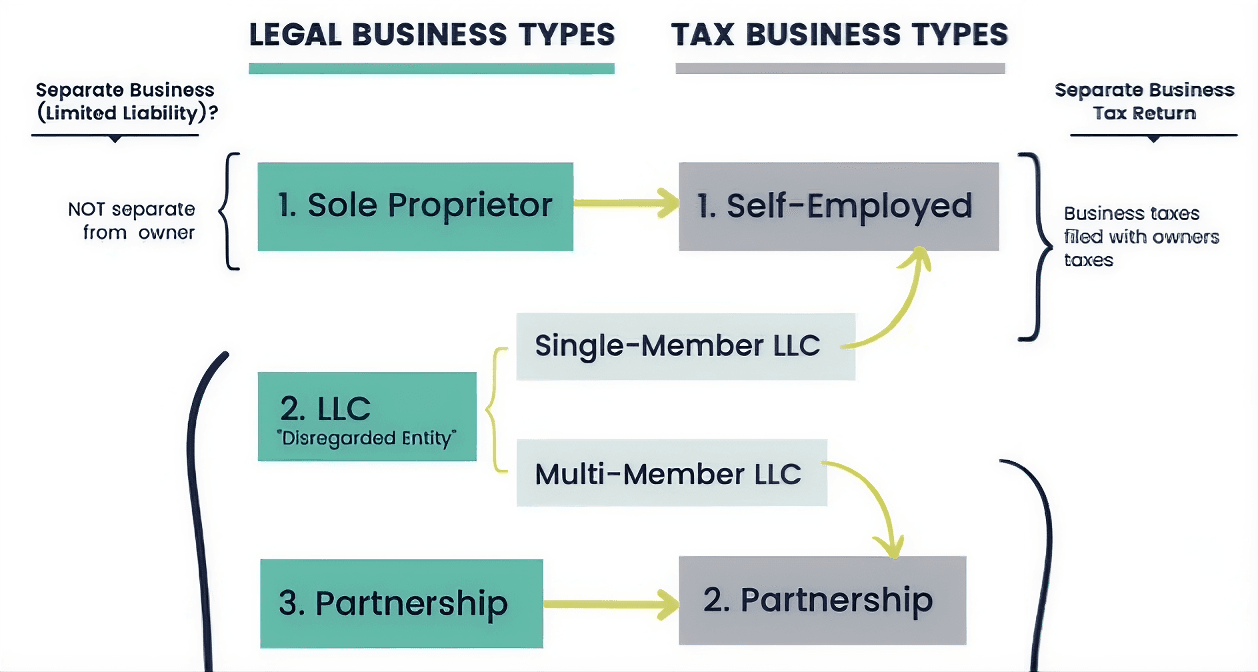
This is why understanding the difference between your legal business type and your tax classification matters. You can legally have an LLC without automatically creating a separate federal income tax return for the business.
What Does “Disregarded Entity” Mean?
The term “disregarded entity” can sound like the LLC doesn't exist, but that's not what it means.
Your LLC is still a legal business. The “disregarded” part refers to how a single-member LLC is treated by default for federal income tax purposes.
For taxes, the business activity generally flows onto the owner's individual tax return rather than being reported on a separate federal business income tax return for the LLC.
So you essentially have two things happening at the same time:
| Legal Side | Federal Income Tax Side |
|---|---|
| You have a separate LLC | The single-member LLC is generally disregarded by default |
| The LLC is a legal business structure | Business activity is generally reported with the owner's individual return |
| You receive the legal benefits associated with having an LLC | You generally don't file a separate federal business income tax return for the LLC under the default treatment |
Is a Single-Member LLC Taxed the Same as a Sole Proprietor?
Under the default federal income tax treatment, a single-member LLC and a sole proprietorship are generally taxed in a similar way.
A sole proprietor reports the business activity with the owner's individual taxes. A single-member LLC that keeps its default disregarded-entity treatment generally does the same.
The major difference is on the legal side.
A sole proprietorship doesn't create a separate legal business from its owner. A single-member LLC does create that separate legal structure while still allowing the owner to keep relatively simple default federal income tax reporting.
This is why a single-member LLC can give you the “best of both worlds.”
You can have the separate legal business structure of an LLC without automatically taking on a separate federal business income tax return under the default treatment.
Does a Single-Member LLC File a Separate Federal Tax Return?
Under the default federal income tax treatment discussed here, generally no separate federal business income tax return is filed for the LLC itself.
Instead, the LLC's business activity is generally included with the owner's individual tax return.
This is different from some of the other tax classifications we'll cover. For example, a multi-member LLC taxed as a partnership generally has a separate partnership tax return, and an LLC that elects S-corporation taxation generally has a separate S-corporation tax return.
That's one reason the default treatment can be simpler for a solo business owner.
But once an LLC has more than one owner, the default tax treatment changes.
How Is a Multi-Member LLC Taxed?
If an LLC has more than one owner, the default federal tax treatment generally changes.
A multi-member LLC is generally taxed as a partnership by default. Unlike a single-member LLC under its default disregarded-entity treatment, the partnership generally files a separate federal business tax return.
The business itself reports its income and expenses on that partnership return, while the owners report their share of the business activity on their individual tax returns.
This is another example of why simply saying “I have an LLC” doesn't tell you how the business is taxed. A single-member LLC and a multi-member LLC can have the same legal business type but different default federal tax classifications.
How Is a Multi-Member LLC Different From a Single-Member LLC for Taxes?
The biggest difference under the default tax treatment is what happens once the LLC has multiple owners.
A single-member LLC is generally disregarded for federal income tax purposes, so the business activity is reported with the owner's individual tax return.
A multi-member LLC, on the other hand, is generally treated as a partnership. The partnership files a separate business tax return, and the owners then report their respective share of the business activity on their individual returns.
A quick way to see the difference is:
| Default Treatment | Single-Member LLC | Multi-Member LLC |
|---|---|---|
| Federal tax classification | Disregarded entity | Partnership |
| Separate federal business tax return | Generally no | Generally yes |
| Business activity ultimately reported by owner(s) | With the owner's individual return | Owners report their respective shares |
How Do the Owners Report Their Share of the Business?
A partnership generally files a separate federal business tax return to report the business's income and expenses.
The partnership's profits or losses are then allocated among the owners, and each owner reports their share on their individual tax return.
So even though the partnership files its own business return, the owners are ultimately responsible for reporting their respective share of the partnership's taxable activity on their individual returns.
How Are Personally Paid Business Expenses Handled in a Partnership?
There’s another difference to keep in mind when your LLC is taxed as a partnership: how you handle business expenses that an owner pays personally.
If you're self-employed under the single-member setup we've been discussing, qualifying business expenses that you personally pay can generally be included with your business expenses.
With a partnership, personally paid business expenses may need to be handled differently. One option discussed in the full breakdown is for the partnership to reimburse the partner for the business expense.
There can also be situations involving unreimbursed partnership expenses, but the treatment depends on whether the partner is required to personally pay those expenses without reimbursement under the partnership's arrangement.
We'll come back to business expenses in more detail when we get into LLC tax write-offs, because your tax classification doesn't just affect how you file—it can also affect how certain expenses need to be handled.
Does an LLC Get More Tax Write-Offs?
Forming an LLC doesn’t automatically give you more tax write-offs.
Your business deductions generally come from the expenses you incur while operating your business—not simply from having an LLC.
So if an expense qualifies as a legitimate business deduction when you were operating as a sole proprietor, forming a single-member LLC doesn’t suddenly create a larger deduction or unlock a completely new set of write-offs.
Do You Get More Business Deductions Just Because You Form an LLC?
No. You don’t automatically get more business deductions simply because you form an LLC.
Think of the LLC and your business expenses as two separate things. Forming the LLC changes your legal business structure, while your deductions still come from the expenses connected to running your business.
So moving from a sole proprietorship to a single-member LLC doesn’t mean you suddenly have a new category of expenses to deduct. The LLC changes the legal side of your business, not the amount of legitimate business expenses you actually have.
And that distinction becomes even clearer when you compare the tax write-offs of a sole proprietor and a single-member LLC.
Are Tax Write-Offs Different for an LLC and a Sole Proprietor?
Not simply because one business has an LLC.
As we covered earlier, a single-member LLC with its default federal income tax treatment is generally taxed similarly to a sole proprietor. The LLC itself doesn’t create a separate list of business deductions.
For example, if you already have qualifying business expenses, forming a single-member LLC doesn’t suddenly create additional deductions just because you now have an LLC. Those write-offs come from the business expenses themselves.
This is why it helps to separate your legal business structure from the write-offs available from operating your business.
| Forming an LLC | Tracking Your Write-Offs |
|---|---|
| Creates a separate legal business structure | Helps capture legitimate business expenses |
| Doesn’t automatically create additional deductions | Helps make sure business expenses aren’t missed |
| May have different tax treatment depending on its classification | Write-offs come from the business expenses themselves |
But there is another category worth understanding, especially if you’re a solo business owner: self-employed write-offs.
What Self-Employed Write-Offs Can You Claim?
When you’re a single-member LLC taxed under the default rules, you’re generally still operating under the federal income tax framework that applies to a self-employed business owner.
This can include certain deductions involving things you also use or own personally.
Some examples include:
- Home office: Using part of your home for business.
- Personally owned vehicle: Using your personal vehicle for business.
- Business travel: Taking deductions for business travel, including situations where some of the travel is personal.
These aren’t special “LLC write-offs.” They’re business deductions available because you’re operating a business and meet the requirements.
And as we discussed earlier with partnerships, the way personally paid business expenses are handled can change depending on how your LLC is taxed.
With a partnership, for example, the business may reimburse the partner for those expenses, while certain unreimbursed partnership expenses can require different handling.
Want to See How Self-Employed Write-Offs Work?
Here’s a quick clip from the full breakdown showing some of the special write-offs that can come into play when you’re self-employed.
How Can Good Accounting Records Help You Capture More Write-Offs?
Before worrying about more advanced tax strategies, you need to actually keep track of your business income and expenses.
Your accounting records are the starting point for your tax write-offs. If you’re not consistently tracking your expenses, it becomes much easier to miss business costs that should have been included in your records.
That’s why having a good accounting system matters. It helps make sure the expenses you’re already entitled to deduct actually make it into your books and ultimately your tax return.
Need a Better Way to Keep Your Accounting Organized?
Good records are much easier to maintain when you have a system for tracking your income and expenses as they happen.
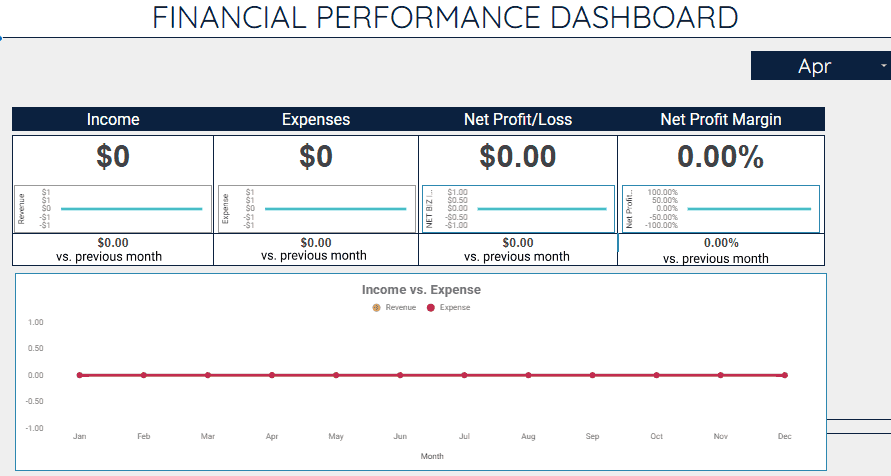
My Auto Accounting Spreadsheet Template gives you a place to keep your business transactions organized instead of trying to piece everything together later.
Get the Auto Accounting Spreadsheet Template Here!
Once you have those records in place, you have a much better foundation for capturing your write-offs and calculating expenses that need a little more work, like your home office, vehicle use, or business travel.
But write-offs aren’t the only potential tax benefit to understand. An LLC can also elect to be taxed as an S corporation—which brings us to the next major tax decision.
Can an LLC Elect to Be Taxed as an S Corp?
Yes. An LLC can elect to be taxed as an S corporation.
This is where an LLC can potentially create a more meaningful tax difference. Instead of changing your legal business structure again, you can keep the LLC and elect a different federal tax treatment.
But an S corp election doesn’t automatically mean lower taxes. Whether it actually saves you money depends on your business profit, how much you need to pay yourself as reasonable compensation, and the additional costs that come with operating as an S corp.
So the real question isn’t simply, “Can my LLC be taxed as an S corp?” It’s whether the election actually makes financial sense for your business.
How Can an S Corp Election Save You Money on Taxes?
The potential savings come from how you pay yourself and how the remaining business profit is treated.
If you work in your S corp, you generally need to pay yourself reasonable compensation through payroll. Then, if the business earns more than that reasonable compensation and its other expenses, there may be remaining profit that isn’t subject to self-employment tax in the same way as self-employed business income.
That difference is where the potential tax savings can come from.
But notice the word potential. Simply electing S corp status doesn’t guarantee that you’ll save money.
And that’s why the amount your business earns matters.
When Can an S Corp Election Actually Save You Money?
An S corp tends to become more worth evaluating when your business is earning substantially more than what you would reasonably need to pay yourself for the work you perform.
If almost all of your business profit would need to go toward reasonable compensation, there may not be much profit left for the tax treatment that creates the potential savings.
On the other hand, if your business earns enough above your reasonable compensation, the numbers may start to look different.
That’s why there isn’t one magic revenue number that automatically means it’s time to elect S corp status. You have to look at your business income, reasonable compensation, and the numbers together.
Should Your LLC Be Taxed as an S Corp?
Here’s a quick clip from the full breakdown showing when an S corp election may start to make sense for an LLC.
6 S Corp Mistakes Business Owners Make
But potential tax savings are only one side of the comparison. An S corp also comes with additional costs and responsibilities that you need to account for.
What Additional Costs Come With an S Corp?
An S corp is more complicated to operate than a single-member LLC using its default tax treatment.
You may have additional costs and responsibilities related to things like:
Payroll
A separate S corporation tax return
Accounting and tax preparation
Additional filings and administrative requirements
So even if an S corp creates potential tax savings, those savings need to be weighed against what it costs to maintain the S corp.
The goal isn’t simply to find the option with the lowest tax number. It’s to determine whether the potential savings are worth the additional cost and complexity for your business.
And one of those additional requirements deserves a closer look: payroll.
Do S Corp Owners Have to Run Payroll?
If you work in your S corporation, you can’t simply take all of the business profit as distributions and avoid paying yourself wages.
You generally need to pay yourself reasonable compensation through payroll for the work you perform in the business.
And this is where some business owners can run into problems. Setting an artificially low salary just to increase the amount you can take outside of payroll isn’t the goal.
Your compensation needs to be reasonable for the work you actually perform.
But that leads to the next question: How much should you actually pay yourself as an S corp owner?
How Much Should You Pay Yourself as an S Corp Owner?
Once you elect S corp tax treatment, deciding how much to pay yourself becomes an important part of the equation.
If you work in your S corporation, you generally need to pay yourself reasonable compensation through payroll. But reasonable compensation isn’t just a number you choose based on how much you want to take as salary versus distributions.
The amount needs to make sense for the work you actually perform in the business.
And that matters because your reasonable compensation can directly affect the potential tax savings you’re trying to evaluate with an S corp.
What Is Reasonable Compensation for an S Corp Owner?
Reasonable compensation is essentially what you would reasonably be paid for the work you perform for your business.
There isn’t one salary amount that works for every S corp owner. The number depends on your specific situation and the work you’re actually doing.
That’s why it’s better to avoid starting with a random salary amount or assuming every business owner should pay themselves the same percentage of their profit. Your compensation should be based on the work you perform—not simply the number that produces the biggest tax savings.
And that distinction becomes especially important when business owners try to lower their salary to reduce payroll taxes.
Can You Pay Yourself a Low Salary to Save More in Taxes?
Simply choosing a very low salary isn’t the strategy.
A lower salary can make the potential S corp tax savings look better on paper because more of the business profit may remain outside of payroll. But reasonable compensation shouldn’t be based on the salary that produces the biggest tax savings.
Your salary still needs to be reasonable for the work you actually perform. Choosing an artificially low amount just to leave more profit outside of payroll can create problems rather than a better tax strategy.
Why Can a Low S Corp Salary Be a Red Flag?
Here’s a quick clip from the full breakdown showing why choosing the lowest possible salary isn’t the goal when you’re paying yourself through an S corp.
How Do You Calculate Reasonable Compensation?
Rather than guessing, reasonable compensation should be based on the owner’s actual situation and the work performed in the business.
A Reasonable Compensation Calculator can help you work through the factors that go into estimating an appropriate salary instead of starting with an arbitrary number.
The goal is to arrive at a reasonable compensation estimate that reflects your situation—because that number will also become an important part of determining whether an S corp could actually save you money.
Need Help Calculating Your Reasonable Compensation?
If you want to see the process in more detail, there’s a separate video that walks through how to calculate reasonable compensation for an S corp owner step by step.
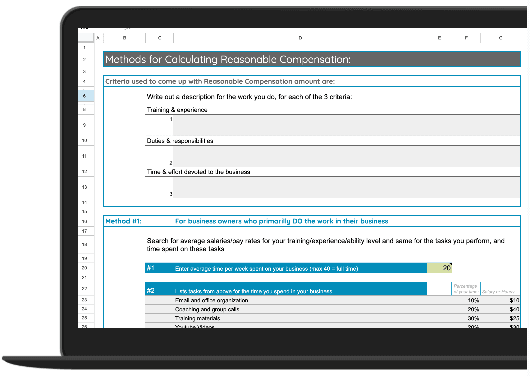 You can also use the Reasonable Compensation Calculator to work through the numbers for your own situation.
Once you have a reasonable compensation estimate, you can start looking at what that salary does to the bigger S corp calculation.
Access the Reasonable Compensation Calculator Here!
Why Does Reasonable Compensation Affect Your Potential S Corp Tax Savings?
Your salary matters because it affects how much of your business profit goes through payroll and how much may remain after reasonable compensation and other business expenses.
That means you can’t accurately evaluate the potential tax savings of an S corp without first having a reasonable compensation estimate.
A lower salary might make the S corp look better in a simple comparison, but if that salary isn’t reasonable for the work you perform, then you’re not comparing realistic numbers.
The best way to work through the decision is in order: first determine reasonable compensation, then use that number when comparing your tax options.
And once you have that number, you’re ready for the bigger comparison: How does an S corp actually stack up against your LLC’s default tax treatment?
LLC vs. S Corp: Which Saves More in Taxes?
Once you have a reasonable compensation estimate, you can make a more realistic comparison between your LLC’s default tax treatment and an S corp election.
The goal isn’t simply to find which option shows the lowest tax number. You also need to look at how much you could actually save, what the S corp will cost to maintain, and whether the difference is large enough to make the added requirements worthwhile.
This is where comparing the numbers side by side becomes useful.
How Do Taxes Compare Between a Default LLC and an S Corp?
With a single-member LLC using its default tax treatment, the business is generally taxed under the self-employed framework we covered earlier.
An S corp changes that tax treatment. If you work in the business, reasonable compensation goes through payroll, while qualifying profit remaining after salary and other business expenses is treated differently.
That difference can create potential tax savings—but the S corp won’t automatically come out ahead in every situation.
The result depends on the actual numbers going into the comparison, which is why looking at the two options side by side is more useful than assuming one business type will always save more.
How Much Could an S Corp Actually Save You in Taxes?
There isn’t one savings amount that applies to every business.
Your potential savings depend on factors we’ve already covered, including your business income and expenses, reasonable compensation, and how much profit remains after those amounts are accounted for.
In the full breakdown, changing the numbers in the comparison can even change which tax treatment comes out ahead. That’s why an example showing an S corp as the lowest-tax option doesn’t mean an S corp will automatically be the best choice for your business.
And taxes aren’t the only numbers that belong in the comparison.
What Costs Should You Include When Comparing an LLC vs. S Corp?
As we covered earlier, an S corp can bring additional costs and responsibilities, including payroll, a separate tax return, accounting and tax preparation, and additional administrative requirements.
Those costs matter when evaluating the potential savings.
If an S corp reduces your taxes but the additional costs and complexity of maintaining it offset much of those savings, the election may not be as beneficial as the tax calculation initially makes it appear.
The comparison needs to look beyond taxes alone and consider what it actually takes to operate under the S corp tax treatment.
And once you have those pieces—the business numbers, reasonable compensation, and additional costs—you can put them together in one comparison.
How Can an LLC vs. S Corp Tax Calculator Help You Compare the Two?
A tax comparison tool can help you bring all of these pieces together instead of looking at each tax decision separately.
The Business Types Tax Comparison lets you compare different tax treatments side by side using your business numbers. Rather than assuming that an S corp will automatically save you more in taxes, you can see how factors like your business income, expenses, and reasonable compensation affect the comparison.
This is especially useful because changing the numbers can change the outcome. The tax treatment that looks best in one scenario may not necessarily be the best option in another.
Ready to Compare Your Business Tax Options?
Throughout this process, we’ve looked at the individual pieces that can affect your tax treatment—from how your LLC is taxed to your business write-offs, S corp election, and reasonable compensation.
The Business Types Tax Comparison brings those pieces together in one place, helping you work through the numbers and see how the different tax treatments could affect your business.
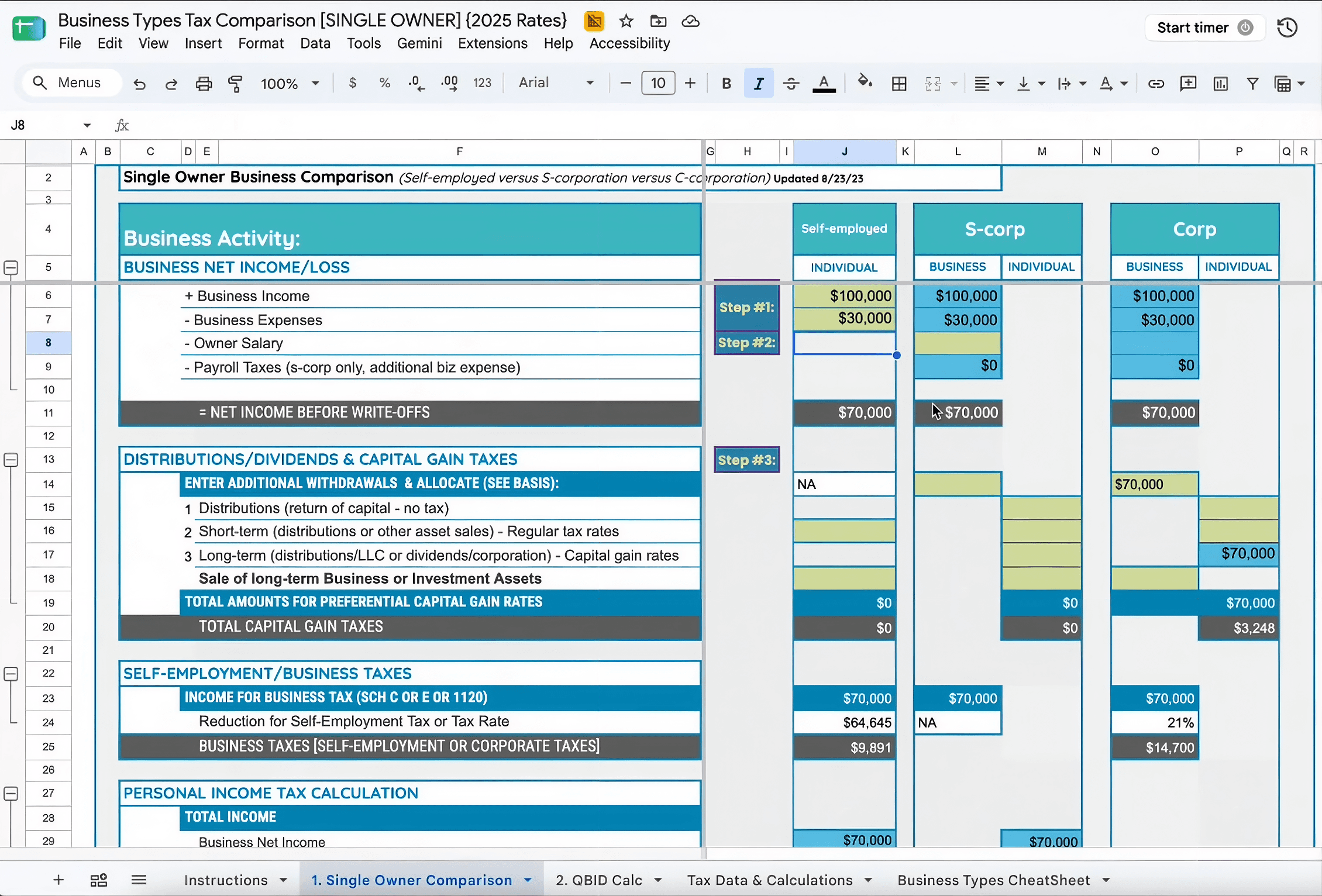
Get the Business Types Tax Comparison Template Here!
Seeing the numbers side by side can make the tradeoffs much clearer—but the point at which those tradeoffs become worthwhile will look different for every business.
Is There a Specific Income Level When an S Corp Election Starts Making Sense?
There isn’t one income level that automatically means an S corp is the right choice.
Two businesses can have similar income but arrive at different results depending on their expenses, reasonable compensation, and the additional costs involved in maintaining an S corp.
That’s why the decision is better made by working through the numbers for your own business rather than relying on a single income threshold.
Once you compare those numbers, you can get a much clearer picture of whether the potential S corp tax savings are actually worth the additional requirements.
Which Tax Treatment Makes the Most Sense for Your LLC?
An LLC can give you flexibility, but it’s important to separate the benefits of the legal structure from the benefits of the tax treatment you choose.
The biggest takeaways are:
- Forming an LLC doesn’t automatically create special federal income tax savings. Your LLC is your legal business structure, while your federal tax treatment depends on how the business is classified.
- Your write-offs come from legitimate business expenses—not simply from having an LLC. Keeping accurate accounting records can help make sure those expenses are actually captured.
- An LLC can elect to be taxed as an S corporation. That election may create tax savings in the right situation, but reasonable compensation, payroll, additional costs, and the overall numbers all need to be considered.
Here’s a quick recap of how these three points fit together when thinking about your LLC’s tax benefits.
Not Sure Which Tax Strategy Makes Sense for Your Business?
Understanding the differences is one thing. Applying them to your own business—and making sure your accounting and taxes are set up 
Inside Master Your Accounting and Taxes, you’ll learn how to organize your accounting, understand your business taxes, capture your write-offs, and work through decisions like whether an S corp election makes sense for your business.
Learn More About Master Your Accounting and Taxes!
FAQs
Can an LLC Owner Take an Owner Draw?
Yes. How you pay yourself depends on how your LLC is taxed. For a single-member LLC using its default tax treatment, the owner can generally take money out of the business through an owner draw.
An owner's draw is different from a business expense. It’s a way of taking money from the business for personal use rather than an expense incurred to operate the business.
Does an Owner Draw Reduce Your Taxable Business Income?
No. Taking an owner's draw doesn’t reduce your taxable business income simply because money was transferred from the business to you personally.
Your taxable business income is based on the business’s income and deductible expenses. An owner's draw is not another business deduction.
Do LLC Owners Have to Pay Themselves a Salary?
It depends on how the LLC is taxed.
A single-member LLC using its default tax treatment generally doesn’t pay the owner a salary through payroll. However, if the LLC elects to be taxed as an S corporation and the owner works in the business, the owner generally needs to receive reasonable compensation through payroll.
Does an LLC Pay Taxes Separately From Its Owner?
It depends on how the LLC is taxed. A single-member LLC using its default federal tax treatment is generally treated as a disregarded entity, so the business income is reported with the owner’s tax return rather than through a separate federal income tax return for the LLC.
Other tax classifications, such as a partnership or S corporation, have different filing requirements.
Can You Change How Your LLC Is Taxed Later?
Yes. An LLC can keep the same legal business structure while electing a different federal tax treatment if the business qualifies.
For example, an LLC may begin with its default tax treatment and later elect to be taxed as an S corporation. That flexibility allows the tax treatment to change without necessarily changing the LLC itself.
About the Author
Hi there, 
Background in public accounting, teaching courses in higher education and specializing in small business coaching, services and education. I'm Amanda!
Your Instructor | The Business Finance Coach
I've spent my career in accounting, tax, finance, and education—from working at PwC and KPMG to teaching accounting and taxes at colleges and universities, and creating educational content for companies including Intuit TurboTax.
Throughout that experience, I kept seeing the same problem: small business owners were hugely underserved.
They were overwhelmed by complicated accounting software, confused by conflicting advice, and often left feeling like this was a hopeless area of their business that they would never understand.
I knew there had to be a simpler way.
So I took what I'd learned from accounting firms, education, and working with real businesses, and created The Business Finance Coach and The Master Your Accounting & Taxes Program.
My goal is to make business finances simple, practical, and understandable—so you can confidently manage your business, keep more of what you earn, and focus on building the business you actually want.