Real estate losses can be frustrating, especially when you find out that you may not be able to deduct those losses right away.
Rental real estate is generally considered a passive activity for tax purposes, which can limit how and when you can deduct your losses. However, there are several exceptions that may allow you to use those losses sooner.
In this guide, I’ll walk you through how rental real estate losses work, what happens when you can’t deduct a loss right away, and the three main ways you may qualify to deduct rental losses: active participation, real estate professional status, and the short-term rental exception.
We’ll also cover additional limitations that may apply to your losses and when a cost segregation study may make sense as part of your real estate tax strategy.
You can also watch the full video breakdown here:
Table of Contents
Can I Deduct a Loss From Rental Real Estate?
You may be able to deduct a loss from rental real estate, but having a rental loss does not automatically mean you can use it to reduce your other income.
That’s because the tax rules treat different types of income and losses differently. Before we get into the exceptions that may allow you to deduct your rental losses, it helps to understand where rental real estate generally falls for tax purposes.
There are three broad categories of income to keep in mind:
| Type of Income | What It Generally Includes |
|---|---|
| Earned Income | Income from working or actively running a business |
| Investment Income | Dividends, interest, and investment gains |
| Passive Income | Income that can include rental activities |
Why Does This Matter for Your Rental Property?
Under Internal Revenue Code (IRC) Section 469, rental real estate is generally considered a passive activity. This means that rental losses generally offset passive income rather than earned income or other nonpassive income, although there are important exceptions that we’ll cover later.
How Are Rental Income and Expenses Reported?
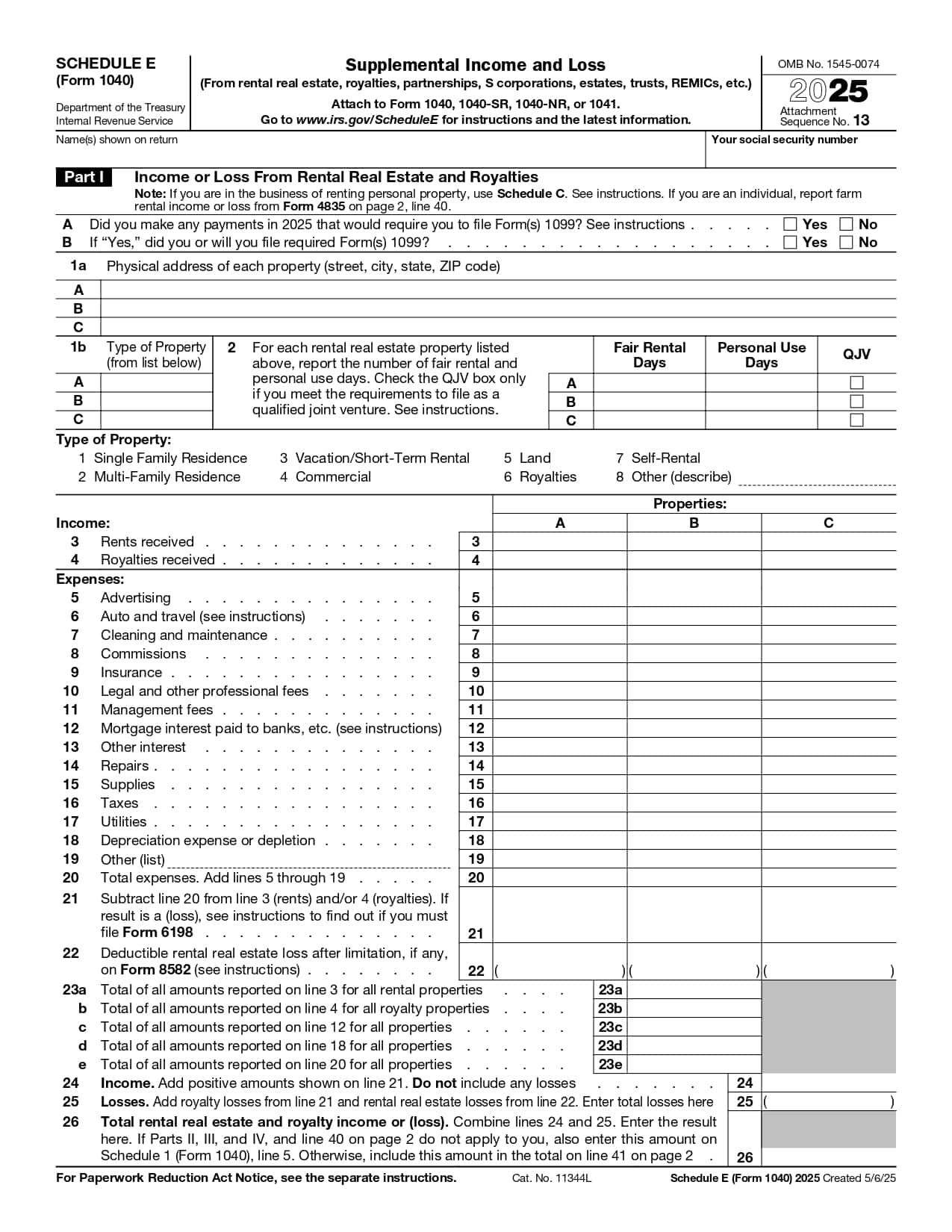
Rental income and expenses are generally reported on Schedule E of your tax return.
This is where you report the income from your rental property and subtract the eligible expenses associated with owning and maintaining it.
What’s left helps determine whether you have net rental income or a rental loss.
However, reporting a rental loss doesn't always mean you can deduct the full amount from your other income. Certain tax rules may limit how much of that loss you can use.
These expenses may include:
Property taxes
Insurance
Utilities
Repairs and maintenance
Yard or property services
Mortgage interest
Depreciation
One important distinction is that you may be able to deduct the interest on your mortgage, but not the entire mortgage payment. The principal portion of your mortgage payment is not a rental expense deduction.
Depreciation can also reduce your rental income. Instead of deducting the entire cost of the property at once, depreciation generally allows you to recover the cost of the rental property over time—typically 27.5 years for residential rental property and 39 years for commercial property.
Want to Learn More About Real Estate Depreciation?
I break down how it works for rental properties in this video:
And here’s something important to remember: you don’t simply lose a rental loss because you can’t deduct it right away. If the loss is limited under the passive activity rules, the unused amount generally carries forward to future years and may be available when you have passive income or when other rules allow the loss to be used.
Of course, most people would rather use those losses sooner—and that’s where the exceptions come in.
Next, we’ll look at the three main exceptions and how each one works.
How Can I Deduct Real Estate Losses on My Taxes?
Although rental real estate losses are generally passive, there are exceptions that may allow you to deduct those losses against other income.
There are three main exceptions to understand:
- Active participation — may allow you to deduct up to $25,000 of rental real estate losses, depending on your income.
- Real estate professional status — may allow qualifying rental activities to be treated as nonpassive when the requirements are met.
- Short-term rental exception — certain short-term rental activities may not be treated as rental activities under the passive activity rules, but material participation is still important.
Each option has different requirements, so simply owning or managing a rental property does not automatically qualify you to deduct the loss.
Let’s start with the first—and generally the easiest of the three to qualify for.
Active Participation and the $25,000 Rental Loss Allowance
Active participation is a special rule for rental real estate that may allow you to deduct up to $25,000 in rental losses even though the rental activity is still considered passive.
The good news is that active participation does not require you to do everything yourself. You generally need to participate in management decisions in a significant and bona fide sense.
Examples of active participation can include:
- Approving new tenants
- Deciding on rental terms
- Approving expenditures
- Arranging repairs or other services
You may still qualify even if you use a property manager, and your spouse’s participation can also count toward meeting the active participation requirement.
However, the full $25,000 allowance is not available to everyone. The amount begins to phase out as your income increases and may eventually be eliminated.
How Does the $25,000 Rental Loss Allowance Phase Out?
| Modified Adjusted Gross Income | Rental Loss Allowance |
|---|---|
| $100,000 or less | Up to $25,000 |
| Over $100,000 | Allowance begins to phase out |
| $150,000 or more | Allowance is generally eliminated |
Real Estate Professional Status
If the $25,000 rental loss allowance is limited or unavailable to you, another option may be qualifying as a real estate professional for tax purposes.
But being a real estate professional for tax purposes does not simply mean that you work in real estate. There are specific requirements you have to meet.
To qualify, there are three main things to keep in mind:
| Requirement | What It Means |
|---|---|
| More Than 50% Test | More than half of the personal services you perform during the year must be in real property trades or businesses in which you materially participate. |
| 750-Hour Test | You must spend more than 750 hours during the year in real property trades or businesses in which you materially participate. |
| Material Participation | You must materially participate in the rental activity for it to be treated as nonpassive. |
You need to meet both the more-than-50% and 750-hour requirements to qualify as a real estate professional. Then, material participation determines whether your rental activity can be treated as nonpassive.
Why Does This Matter?
If you qualify as a real estate professional and materially participate in the rental activity, the rental activity may no longer be treated as passive. The rental activity is still generally reported on Schedule E, but qualifying losses may be able to offset other income, including earned income.
The more-than-50% requirement can be one of the biggest hurdles. If you work full-time outside of real estate, for example, more than half of the personal services you perform during the year would still need to be in qualifying real estate activities.
That’s why keeping good records of your time and activities is especially important if you plan to claim real estate professional status.
How Do You Materially Participate in a Rental Property?
Qualifying as a real estate professional is only part of the equation. You also need to determine whether you materially participate in the rental activity.
There are several ways to meet the material participation requirement, and you only need to meet one of the applicable tests.
Some common ways to qualify include:
- Participating in the activity for more than 500 hours during the year
- Doing substantially all of the work for the activity yourself
- Participating for more than 100 hours when no one else participates more than you
- Materially participating in the activity for five of the previous ten years
If you own multiple rental properties, you may also be able to make an election to treat your rental properties as one activity when determining material participation.
This can be important because meeting the material participation requirements separately for each individual property may be much more difficult.
What If You Are Married?
Real estate professional status is determined individually, even if you are married. In other words, you cannot combine your hours with your spouse’s hours to meet the more-than-50% or 750-hour requirements.
However, your spouse’s participation can count when determining whether you materially participated in the rental activity.
This distinction is important because qualifying as a real estate professional and materially participating are related, but they are not the same test.
And if you work full-time in a job outside of real estate, meeting the more-than-50% requirement can be especially difficult because more than half of your working time would need to be spent in qualifying real estate activities.
Keeping good records of your time and activities is also important if you plan to claim real estate professional status.
Think You Might Qualify as a Real Estate Professional?
I break down the requirements and how to document your hours in more detail in this video:
Short-Term Rental Exception
The third exception involves short-term rentals.
If your rental property qualifies under the short-term rental rules, you may be able to deduct your losses against active income if you also materially participate in the activity.
There are two main situations to look at:
- The average length of a guest’s stay is 7 days or less, or
- The average stay is 30 days or less and you provide substantial services.
What Does Providing Substantial Services Mean?
This can include things like regular cleaning, changing linens, maid service, or other significant services provided to your guests. Think of properties that operate more like a bed and breakfast or hotel rather than a traditional rental.
Meeting one of these short-term rental criteria is only the first step. The next question is whether you materially participate in the activity.
Can Short-Term Rental Losses Offset Ordinary Income?
Potentially, yes.
If your short-term rental meets one of the criteria above and you materially participate in the activity, the losses may be able to offset active income.
As we covered earlier, there are several ways to meet the material participation requirement. One of those is participating in the activity for more than 500 hours during the year.
That works out to roughly 10 hours per week. If you only have one short-term rental, reaching that amount of participation may be difficult.
If you own multiple short-term rentals, there may also be an option to aggregate certain activities when determining material participation. However, these rules are not as simple as the grouping election we discussed for real estate professional status.
Here’s the basic idea:
Meet the short-term rental criteria
↓
Materially participate in the activity
↓
Your losses may be able to offset active income
This is what makes the short-term rental exception especially important: you do not necessarily have to qualify as a real estate professional to potentially use the losses against active income.
Remember, the 500-hour test is only one way to meet the material participation requirement. If you think the short-term rental exception may apply to you, it’s worth looking at the other material participation tests to see whether you qualify.
Even if you qualify under one of these exceptions, there are still other rules that can limit how much of your real estate loss you can actually deduct. These include basis limitations, at-risk rules, and excess business loss limitations.
Let’s look at how each one works.
What Other Rules Can Limit Real Estate Loss Deductions?
Even if your rental loss qualifies under one of the exceptions we just covered, that does not necessarily mean the entire loss will be deductible.
There are additional limitations that can affect how much of the loss you can actually use.
Basis Limitation
The first limitation to consider is your basis in the property or activity.
Depending on how your rental activity is owned, your available basis can affect how much of a loss you are able to deduct. Basis generally represents your tax investment and can change over time as certain adjustments are made.
So, even if you otherwise qualify to deduct a rental loss, basis limitations may still affect how much of that loss you can currently use.
Want More Help Understanding and Tracking Your Basis?
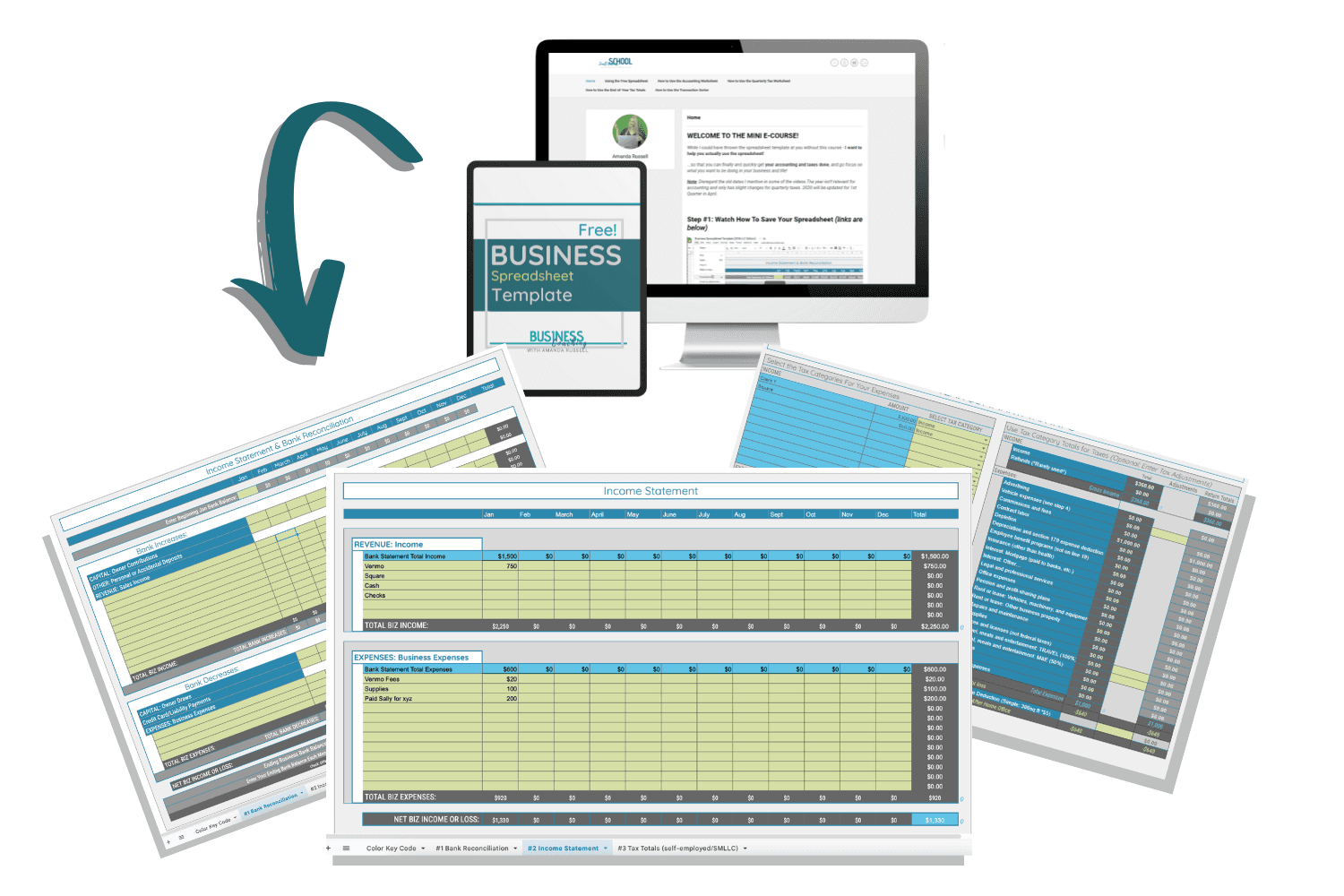
Check out my free Business Spreadsheet Template and training for additional resources on real estate, LLCs, partnerships, and S-corporations.
You’ll also find helpful guidance on the accounting and tax basics you need to know to better understand your numbers and stay organized.
Access the Free Spreadsheet & Training Here!
At-Risk Rules
Next are the at-risk rules.
These rules generally limit your deductible loss to the amount you are actually at risk of losing in the activity. In simple terms, you generally cannot deduct more than the amount you could personally lose financially.
When financing is involved, determining the amount you have at risk can become more complicated and may depend on the type and terms of the financing.
This is especially important when a property has multiple owners. Even if you own the property with other people, you generally cannot deduct more than the amount you are personally at risk of losing.
So, even if you otherwise qualify to deduct a rental loss, the at-risk rules can still limit how much of that loss you can actually use.
Excess Business Loss Limitation
Finally, even after applying the other loss limitations, you may still be subject to the excess business loss limitation.
This rule can limit the total amount of business losses that a noncorporate taxpayer can deduct during the year. The excess business loss limitation was recently made permanent, making it an important rule to consider when you have significant business losses.
For 2026, the threshold is $256,000 for a single return or $512,000 for a joint return. If your losses exceed the applicable threshold, the excess may be limited rather than fully deducted in the current year.
Can You Do a Cost Segregation Study on a Short-Term Rental?
Yes, you can do a cost segregation study on a short-term rental. If you’re in a position to deduct larger real estate losses, cost segregation may be a strategy worth considering because it can allow you to take more of your real estate depreciation deductions upfront.
However, generating a larger depreciation deduction does not automatically mean you can use the entire resulting loss in the current year.
As we covered above, whether you can deduct those losses still depends on the rules that apply to your rental activity, including material participation and the additional loss limitations.
This is why it’s important to understand whether you can actually use the losses before deciding how cost segregation fits into your overall real estate tax strategy.
Want to Learn More About Cost Segregation?
Watch my full video where I break down how cost segregation works and how it can help you take more of your real estate depreciation deductions upfront.
Where Can You Get a Cost Segregation Study?
If you're considering a cost segregation study, I have a resource that can connect you with a professional who can prepare the report for your property.

Get a Cost Segregation Report Here!
What to Remember About Rental Real Estate Losses
Rental real estate is generally considered a passive activity, which can limit when you can deduct your losses. However, there are three main exceptions that may allow you to use those losses sooner: active participation, real estate professional status, and the short-term rental exception.
Each option has its own requirements, and qualifying under an exception does not necessarily mean that your entire loss will be deductible.
Your basis, amount at risk, and the excess business loss limitation can still affect how much of the loss you can use.
The key is understanding which rules apply to your situation before planning around larger rental losses. And if you’re in a position to use those losses, strategies like cost segregation may also be worth considering to accelerate depreciation deductions.
Need Help Getting Your Business and Rental Finances Organized?

Keeping your rental property finances organized can make tax time much easier. It helps you track your income, expenses, and records throughout the year while giving you a clearer picture of how your rental property is performing.
Having everything in one place also makes it easier to review your finances, identify areas that may need attention, and make informed decisions about your rental property.
If you're looking for a simpler way to manage the accounting and tax side of your rental property, you can explore my spreadsheet templates and financial organization resources below.
Explore Master Your Accounting & Taxes Program Here!
FAQs
How Much Real Estate Loss Can You Deduct?
There is no single amount that applies to everyone. How much you can deduct depends on the rules that apply to your rental activity.
For example, the active participation exception may allow you to deduct up to $25,000 in rental real estate losses, subject to income limitations. Your basis, amount at risk, and the excess business loss limitation can also affect how much of your loss you can actually deduct.
What Is the $25,000 Rental Loss Allowance?
The $25,000 rental loss allowance is a special exception that may allow rental property owners who actively participate in their rental activity to deduct up to $25,000 in rental real estate losses.
The allowance begins to phase out when your modified adjusted gross income exceeds $100,000 and is generally eliminated at $150,000.
What Can Passive Real Estate Losses Offset?
Rental real estate is generally considered a passive activity, so rental losses generally offset passive income.
However, certain exceptions may allow rental losses to offset other income when the applicable requirements are met.
Is It Better to Be a Real Estate Professional for Tax Purposes?
Qualifying as a real estate professional for tax purposes may allow rental activities in which you materially participate to be treated as nonpassive. This may allow qualifying rental losses to offset other income.
However, real estate professional status has specific requirements, so whether it is beneficial depends on your individual situation.
What Is the 50% Rule for Real Estate Professionals?
To qualify as a real estate professional for tax purposes, more than half of the personal services you perform during the year must be in real property trades or businesses in which you materially participate.
You must also meet the separate 750-hour requirement, so meeting the more-than-50% test alone is not enough to qualify.
What Expenses Can Be Used to Offset Rental Income?
Eligible rental expenses can generally reduce the income you earn from your rental property. These may include property taxes, insurance, utilities, repairs and maintenance, property services, mortgage interest, and depreciation.
Remember that while mortgage interest may generally be deductible as a rental expense, the principal portion of your mortgage payment is not.
About the Author
Hi there, 
Background in public accounting, teaching courses in higher education and specializing in small business coaching, services and education. I'm Amanda!
Your Instructor | The Business Finance Coach
I've spent my career in accounting, tax, finance, and education—from working at PwC and KPMG to teaching accounting and taxes at colleges and universities, and creating educational content for companies including Intuit TurboTax.
Throughout that experience, I kept seeing the same problem: small business owners were hugely underserved.
They were overwhelmed by complicated accounting software, confused by conflicting advice, and often left feeling like this was a hopeless area of their business that they would never understand.
I knew there had to be a simpler way.
So I took what I'd learned from accounting firms, education, and working with real businesses, and created The Business Finance Coach and The Master Your Accounting & Taxes Program.
My goal is to make business finances simple, practical, and understandable—so you can confidently manage your business, keep more of what you earn, and focus on building the business you actually want.